

Dengue Symptoms & Prevention: Early Warning Signs Every Family Should Know
Monsoon brings much-needed relief from the summer heat, but it also increases the risk of mosquito-borne diseases such as dengue. Every year, thousands of people are affected by dengue during the rainy season. Early identification of symptoms and timely medical care play an important role in reducing complications.
This guide explains what dengue is, its symptoms, warning signs, treatment options, and practical prevention tips to help keep you and your family safe.
What is Dengue?
Dengue is a viral infection transmitted through the bite of an infected Aedes aegypti mosquito. These mosquitoes are most active during the daytime and breed in clean, stagnant water found in containers, flower pots, coolers, buckets, and discarded tyres.
Unlike many illnesses, dengue does not spread directly from one person to another. The infection occurs only through mosquito bites.
Common Symptoms of Dengue
Symptoms usually appear 4 to 10 days after the mosquito bite.
Common symptoms include:
Sudden high fever
Severe headache
Pain behind the eyes
Muscle and joint pain
Extreme fatigue
Skin rash
Nausea or vomiting
Loss of appetite
Mild bleeding from gums or nose (in some cases)
Many people initially mistake dengue for a common viral fever, making early medical evaluation important, especially during the monsoon season.
Early Warning Signs That Should Not Be Ignored
While many people recover with appropriate care, some may develop severe dengue, which requires urgent medical attention.
Seek immediate medical evaluation if you experience:
Persistent vomiting
Severe abdominal pain
Difficulty breathing
Bleeding from gums or nose
Blood in vomit or stools
Extreme weakness or drowsiness
Cold or clammy skin
Reduced urine output
Sudden drop in blood pressure
These symptoms may indicate complications that require close medical monitoring.
Who Is at Higher Risk?
Although anyone can develop dengue, some individuals are more likely to experience severe illness.
Higher-risk groups include:
Children
Older adults
Pregnant women
Individuals with diabetes
People with heart disease
Patients with weakened immune systems
Individuals who have previously had dengue infection
Extra precautions and early consultation are advisable for these groups.
How is Dengue Diagnosed?
Doctors diagnose dengue based on symptoms, physical examination, and laboratory investigations.
Common tests include:
Complete Blood Count (CBC)
Dengue NS1 Antigen Test
Dengue IgM / IgG Antibody Test
Platelet Count
Hematocrit
These tests help confirm the infection and assess its severity.
Treatment for Dengue
There is currently no specific antiviral medication for dengue. Treatment focuses on relieving symptoms, preventing dehydration, and monitoring for complications.
Treatment may include:
Adequate hydration
Oral rehydration solutions
Rest
Fever management using medications recommended by a healthcare professional
Regular monitoring of platelet count when indicated
Hospital admission may be recommended for patients with warning signs, severe dehydration, significant bleeding, or other complications.
Do not take medications such as ibuprofen, diclofenac, or aspirin without medical advice, as they may increase the risk of bleeding.
Can Dengue Be Prevented?
Yes. Preventing mosquito bites remains the most effective way to reduce the risk of dengue.
Practical prevention measures include:
Remove stagnant water from containers around your home.
Cover water storage tanks.
Use mosquito repellents.
Wear full-sleeved clothing.
Install mosquito screens where possible.
Sleep under mosquito nets if required.
Keep your surroundings clean.
Empty coolers and flower pots regularly.
Community participation plays a significant role in controlling mosquito breeding.
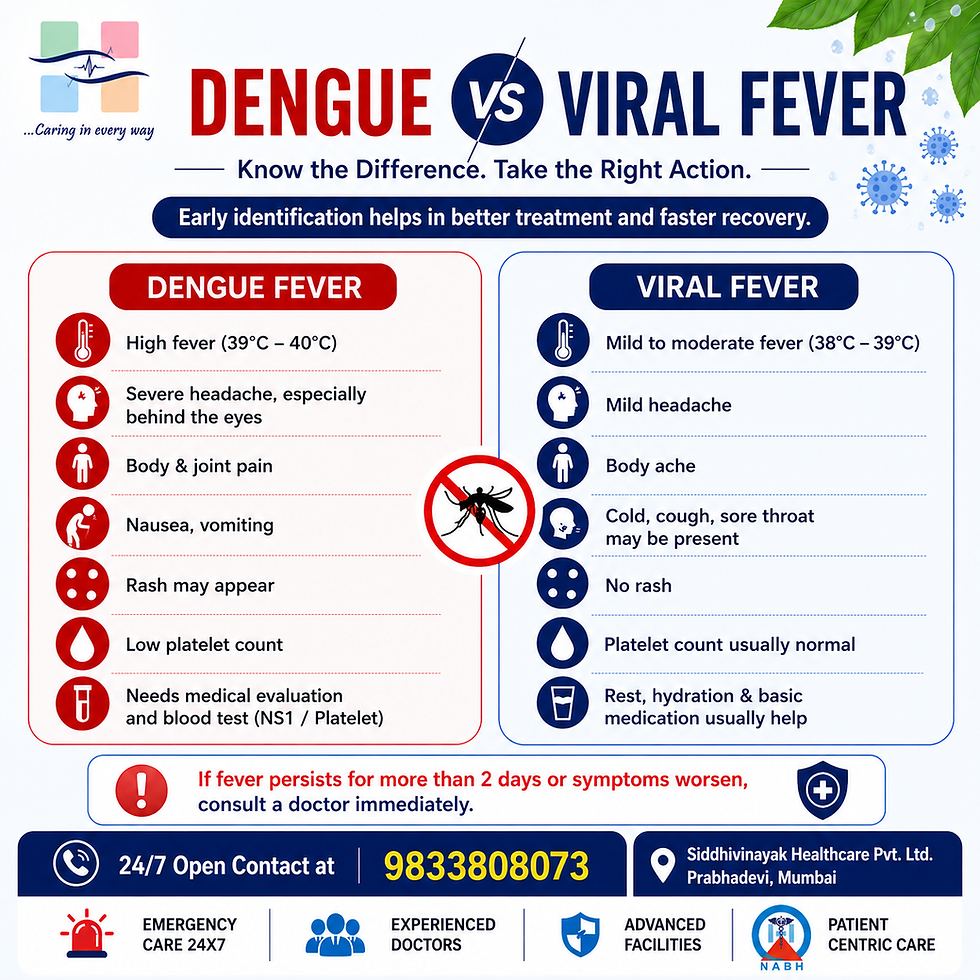
Dengue vs Viral Fever
Many symptoms overlap, making it difficult to distinguish between dengue and viral fever without proper evaluation.
Dengue may involve:
High persistent fever
Severe body pain
Pain behind the eyes
Skin rash
Platelet count changes
Viral fever often presents with milder symptoms and generally resolves without these specific features.
If fever persists or symptoms worsen, medical assessment is recommended.
When Should You Visit a Hospital?
Do not delay seeking medical attention if:
Fever lasts more than two to three days.
You experience severe abdominal pain.
Vomiting becomes persistent.
Bleeding develops.
You become unusually weak or drowsy.
Breathing becomes difficult.
Symptoms worsen after the fever starts improving.
Prompt evaluation can help identify complications early.
Protect Your Family During the Monsoon
Simple daily habits can significantly reduce the risk of mosquito-borne diseases.
Remember to:
Keep your surroundings free from stagnant water.
Stay hydrated.
Seek medical advice if fever persists.
Avoid self-medication.
Encourage family members to follow mosquito prevention measures.
Prevention remains the most effective strategy against dengue.
Conclusion
Dengue is a preventable disease, but ignoring early symptoms may increase the risk of serious complications. Recognising warning signs, maintaining good mosquito control practices, and seeking timely medical evaluation are key steps in protecting yourself and your family.
If you experience persistent fever or symptoms suggestive of dengue, consult a qualified healthcare professional for appropriate evaluation and guidance.
Medical Disclaimer
This article is intended for educational purposes only and should not replace professional medical advice, diagnosis, or treatment. If you have persistent fever or severe symptoms, seek prompt medical care.
Frequently Asked Questions (FAQs)
1. What are the first symptoms of dengue?
The earliest symptoms of dengue usually include sudden high fever, severe headache, body pain, pain behind the eyes, fatigue, nausea, and loss of appetite. Symptoms typically appear 4–10 days after being bitten by an infected mosquito.
2. How long does dengue fever usually last?
The fever generally lasts between 2 and 7 days. However, weakness and tiredness may continue for several weeks after recovery.
3. Can dengue spread from one person to another?
No. Dengue does not spread through direct contact with an infected person. It spreads only through the bite of an infected Aedes mosquito.
4. What foods should I eat during dengue recovery?
People recovering from dengue should focus on staying hydrated and eating easily digestible, nutritious foods such as:
Fresh fruits
Vegetable soup
Coconut water
Oral rehydration solutions
Rice and khichdi
Protein-rich foods as advised by a doctor
Always follow medical advice based on your condition.
5. Does a low platelet count always mean dengue?
No. A low platelet count can occur due to several medical conditions. Laboratory tests and clinical evaluation are necessary to confirm dengue.
6. When should someone with dengue be hospitalized?
Hospital care may be required if a patient develops:
Persistent vomiting
Severe abdominal pain
Bleeding
Difficulty breathing
Severe dehydration
Confusion
Significant drop in platelet count
Signs of shock
Prompt medical evaluation is important in these situations.
7. Can dengue occur more than once?
Yes. There are four different dengue virus serotypes. A person can become infected more than once, and a subsequent infection may increase the risk of severe dengue.
8. How can I prevent dengue at home?
Simple preventive measures include:
Removing stagnant water
Covering water storage containers
Using mosquito repellents
Wearing full-sleeved clothing
Installing mosquito screens
Keeping surroundings clean
These practices help reduce mosquito breeding.


Comments