

ICU Hospital in Dadar West – Critical Care Support Near Dadar West

A medical emergency can develop unexpectedly and may require immediate assessment, stabilization, and continuous monitoring. In such situations, access to an Intensive Care Unit can play an important role in managing critically ill patients.
An ICU is designed for patients who need a higher level of medical attention than is available in a regular hospital ward. It combines continuous observation, specialized equipment, trained healthcare professionals, and rapid intervention when a patient’s condition changes.
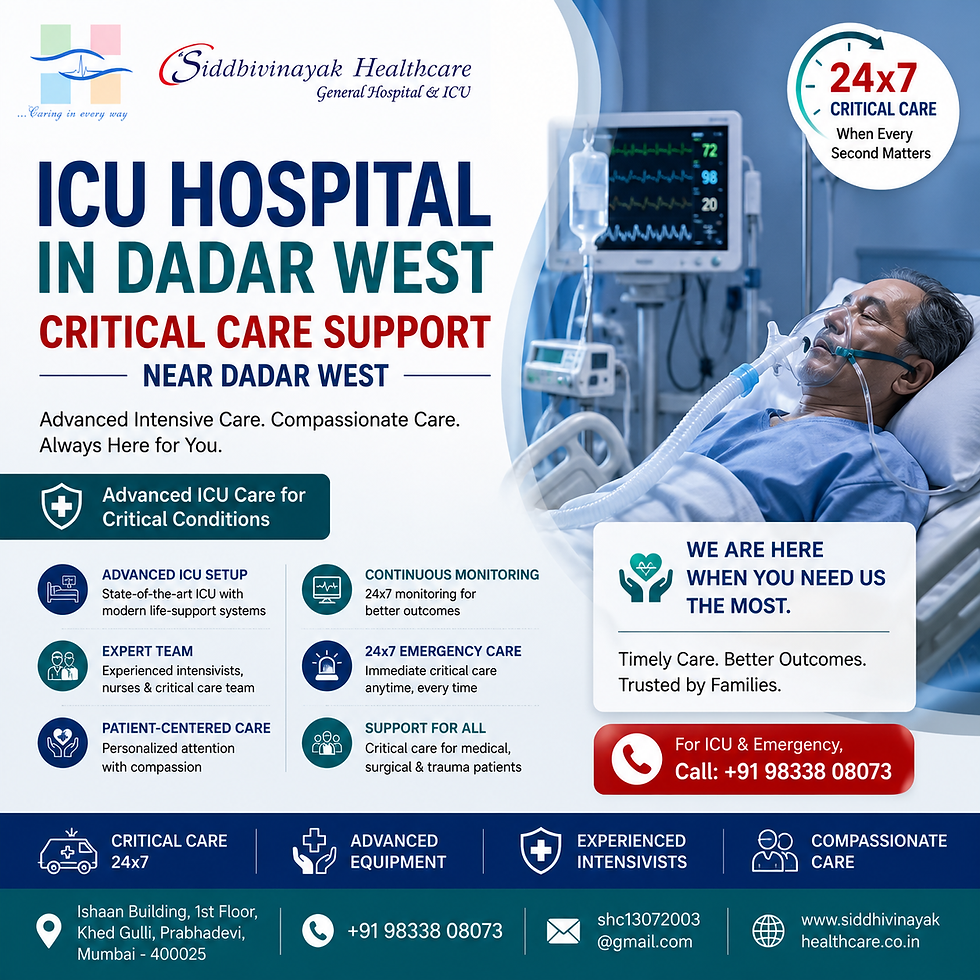
People searching for an ICU Hospital in Dadar West may consider Siddhivinayak Healthcare, located in nearby Prabhadevi. The hospital serves patients from Dadar West, Shivaji Park, Dadar East, Mahim, Parel, Matunga, Lower Parel, and surrounding parts of Mumbai.
Its documented hospital profile includes ICU facilities, emergency care, multispeciality services, OPD support, and round-the-clock doctor availability.
What Is an Intensive Care Unit?
An Intensive Care Unit, commonly called an ICU, is a specialized hospital department for patients who are seriously ill, medically unstable, or at risk of rapid deterioration.
ICU patients may require:
Continuous heart-rate monitoring
Blood pressure monitoring
Oxygen-level monitoring
Breathing support
Intravenous medicines
Frequent blood tests
Close neurological observation
Fluid and electrolyte management
Infection monitoring
Rapid emergency intervention
The purpose of intensive care is to stabilize the patient, support essential organ functions, treat the underlying medical problem, and prevent further complications.
How Is ICU Care Different From a General Hospital Ward?
A regular hospital ward is suitable for patients who are medically stable but still require treatment, observation, or nursing care.
An ICU provides a higher level of support.
ICU care may include:
Continuous bedside monitoring
More frequent medical assessments
Advanced monitoring equipment
Immediate response to sudden changes
Support for breathing or circulation
Closer nurse-to-patient observation
Coordinated care from multiple specialists
The decision to admit a patient to an ICU depends on the seriousness of the condition, vital signs, organ function, response to treatment, and risk of deterioration.
When May a Patient Need ICU Admission?
Not every hospital admission requires intensive care. ICU admission is generally considered when a patient needs continuous monitoring, advanced support, or immediate medical intervention.
Common reasons may include the following.
Severe Breathing Difficulty
Patients may require ICU care when breathing becomes severely compromised due to:
Pneumonia
Asthma attack
Chronic lung disease
Pulmonary oedema
Severe infection
Respiratory failure
Low oxygen levels
Some patients may require oxygen therapy, non-invasive breathing support, or mechanical ventilation depending on their condition.
Heart Attack or Serious Cardiac Problems
A patient with a suspected or confirmed heart attack may need intensive monitoring, particularly when there is:
Unstable blood pressure
Abnormal heart rhythm
Chest pain
Breathing difficulty
Reduced heart function
Risk of sudden deterioration
Continuous monitoring helps the medical team identify and respond to dangerous changes quickly.
Stroke or Neurological Emergency
Patients with stroke, seizures, head injury, altered consciousness, or sudden neurological decline may require ICU observation.
Close neurological monitoring may be necessary to assess:
Level of consciousness
Pupil response
Limb movement
Speech
Blood pressure
Oxygen levels
Seizure activity
Severe Infection or Sepsis
Sepsis is a serious reaction to infection that can affect multiple organs.
A patient may require ICU care if there are signs such as:
Very low blood pressure
High or low body temperature
Rapid heart rate
Confusion
Difficulty breathing
Reduced urine output
Organ dysfunction
Early medical treatment is important because sepsis can progress rapidly.
Uncontrolled Diabetes Complications
People with diabetes may need intensive care in severe situations such as:
Diabetic ketoacidosis
Hyperosmolar hyperglycaemic state
Severe hypoglycaemia
Altered consciousness
Severe dehydration
Electrolyte imbalance
These conditions require regular blood sugar monitoring, fluid correction, and close medical supervision.
Kidney or Liver Failure
Patients with severe kidney or liver dysfunction may develop:
Fluid imbalance
Electrolyte disturbances
Toxin accumulation
Confusion
Breathing difficulty
Blood-pressure changes
Abnormal bleeding
Intensive monitoring may be required while the medical team manages the underlying condition.
Major Surgery or High-Risk Procedures
Some patients are shifted to the ICU after surgery when they require:
Close postoperative monitoring
Pain management
Blood-pressure support
Breathing support
Cardiac monitoring
Observation for bleeding or complications
This is more likely after major surgery or in patients with multiple medical conditions.
Trauma and Serious Injury
ICU care may be required following:
Road-traffic accidents
Head injury
Chest trauma
Major blood loss
Multiple fractures
Internal injuries
Severe burns
Immediate stabilization and continuous monitoring are essential in serious trauma cases.
What Equipment Is Commonly Used in an ICU?
An ICU may use several types of equipment depending on the patient’s needs.
Patient Monitor
Tracks vital signs such as:
Heart rate
Blood pressure
Oxygen saturation
Respiratory rate
Heart rhythm
Ventilator
Supports breathing when a patient is unable to breathe adequately without assistance.
Infusion Pumps
Deliver medicines, fluids, or nutrition at carefully controlled rates.
Defibrillator
May be used during certain life-threatening heart rhythm emergencies.
Oxygen-Support Equipment
Provides oxygen through nasal tubes, masks, or advanced breathing-support systems.
Suction Equipment
Helps remove secretions from the airway when necessary.
Bedside Testing and Emergency Equipment
Allows the healthcare team to respond quickly to changes in a patient’s condition.
Not every ICU patient requires every type of equipment. Treatment is based on individual medical needs.
Who Takes Care of Patients in the ICU?
ICU care is generally delivered through a coordinated team approach.
The team may include:
Critical-care doctors
Physicians
Surgeons
Anaesthesiologists
Nurses trained in intensive care
Respiratory-care professionals
Physiotherapists
Laboratory staff
Radiology teams
Dietitians
Other specialists as required
This multidisciplinary approach is important because critically ill patients may have more than one organ or medical system affected.
What Happens After ICU Admission?
The exact process depends on the patient’s condition.
A general ICU care pathway may include:
Initial Assessment
The medical team evaluates:
Airway and breathing
Blood circulation
Blood pressure
Heart rhythm
Level of consciousness
Oxygen level
Temperature
Urine output
Existing illnesses
Current medicines
Stabilization
Immediate treatment may be started to support breathing, circulation, or other vital functions.
Diagnostic Testing
Tests may include:
Blood investigations
ECG
Chest X-ray
Ultrasound
CT scan
Infection-related testing
Kidney and liver function tests
Continuous Monitoring
Vital signs and treatment response are monitored closely.
Treatment of the Underlying Condition
Care may include:
Antibiotics
Intravenous fluids
Heart medicines
Blood-pressure support
Insulin
Oxygen therapy
Ventilator support
Other condition-specific treatment
Review and Step-Down Care
When the patient becomes stable and no longer requires intensive monitoring, they may be transferred to a step-down unit or regular ward.
Why Is Early Emergency Care Important?
In critical illness, delays can increase the risk of complications.
Warning signs that may require immediate medical attention include:
Severe chest pain
Sudden breathlessness
Loss of consciousness
Sudden confusion
Weakness on one side
Difficulty speaking
Uncontrolled bleeding
Very low oxygen level
Repeated seizures
Serious injury
Sudden collapse
Persistent vomiting with weakness
Very high or very low blood sugar symptoms
Families should not wait for routine consultation when emergency warning signs are present.
ICU Care for Senior Citizens
Senior citizens are more likely to have multiple medical conditions such as diabetes, hypertension, heart disease, kidney disease, or lung problems.
They may require ICU care when they develop:
Severe infection
Pneumonia
Heart failure
Stroke
Dehydration
Electrolyte imbalance
Complications after surgery
Sudden loss of consciousness
Breathing difficulty
Treatment decisions for older adults are based on overall health, current condition, previous functional status, and expected benefit from intensive treatment.
ICU Care for Patients With Diabetes and Hypertension
Diabetes and hypertension can increase the risk of heart disease, stroke, kidney problems, and severe infection.
During critical illness, blood sugar and blood pressure can change rapidly.
ICU monitoring may help the medical team manage:
High or low blood sugar
Unstable blood pressure
Fluid balance
Kidney function
Heart rhythm
Electrolyte disturbances
Treatment response
Patients with chronic conditions should keep their medication list and medical history available for emergency situations.
What Should Families Expect During ICU Care?
An ICU can feel overwhelming for family members because of the equipment, alarms, restricted visitation, and seriousness of the patient’s condition.
Families may be asked to:
Share the patient’s medical history
Provide a list of medicines
Submit previous reports
Inform doctors about allergies
Identify the primary family contact
Follow infection-control and visiting rules
Participate in treatment discussions
Provide consent for certain procedures
It is helpful to write down questions and discuss them with the treating team during scheduled updates.
Questions Families Can Ask the ICU Team
Families may consider asking:
What is the main medical problem?
Is the patient currently stable?
What treatment is being given?
Is breathing support required?
Which tests have been performed?
Are any organs affected?
What changes are being monitored?
What are the next treatment steps?
When may the patient be moved out of the ICU?
What care may be needed after discharge?
Medical outcomes cannot always be predicted immediately. The situation may evolve depending on treatment response.
Common Myths About ICU Care
Myth: Every ICU Patient Is on a Ventilator
Not all patients require a ventilator. Some are admitted for close monitoring, oxygen therapy, blood-pressure support, or high-risk postoperative observation.
Myth: ICU Admission Always Means the Condition Is Hopeless
ICU admission means the patient requires specialized monitoring and treatment. Many patients stabilize and recover sufficiently to move to a regular ward.
Myth: More Tests Always Mean Better Care
Tests should be selected based on medical need. Unnecessary testing does not automatically improve outcomes.
Myth: Families Should Make Treatment Decisions Without Medical Explanation
Families should ask questions and understand the benefits, risks, and alternatives of major procedures or treatment decisions.
What Happens After Leaving the ICU?
Recovery does not always end when a patient leaves intensive care.
Some patients may experience:
Weakness
Reduced mobility
Poor appetite
Sleep disturbance
Emotional stress
Breathing difficulty
Need for physiotherapy
Need for medication adjustment
Requirement for continued monitoring
Follow-up care may include:
Physician consultation
Specialist follow-up
Physiotherapy
Nutrition support
Blood tests
Wound care
Medication review
Home-care guidance
The recovery period depends on the severity of illness, length of ICU stay, age, and existing medical conditions.
Why Consider Siddhivinayak Healthcare Near Dadar West?
Siddhivinayak Healthcare is located in Prabhadevi and serves patients from Dadar West and neighbouring areas.
Its documented hospital profile lists:
ICU facilities
Emergency services
Multispeciality care
Diagnostic and OPD services
24-hour doctor availability
Facilities for long-term and follow-up care
These services support the hospital’s role in emergency stabilization, close patient monitoring, and coordinated treatment.
The hospital’s digital healthcare roadmap also prioritizes emergency visibility, patient enquiries, local healthcare access, educational content, and stronger awareness among communities within the surrounding area.
Areas Served Near Dadar West
Patients may access Siddhivinayak Healthcare from:
Dadar West
Shivaji Park
Dadar East
Prabhadevi
Mahim
Matunga
Parel
Lower Parel
Worli
Nearby central Mumbai areas
The hospital’s address is Ishaan Building, 1st Floor, Khed Gulli, Prabhadevi, Mumbai – 400025.
Conclusion
An Intensive Care Unit provides specialized monitoring and treatment for patients who are critically ill, medically unstable, or at risk of rapid deterioration.
Timely emergency assessment, continuous monitoring, trained medical teams, and access to advanced support can be important in managing serious conditions such as breathing failure, heart emergencies, stroke, sepsis, severe diabetes complications, trauma, and postoperative instability.
People searching for an ICU Hospital in Dadar West can consider Siddhivinayak Healthcare in nearby Prabhadevi for intensive care, emergency support, diagnostic services, and multispeciality medical management.
In a medical emergency, do not delay care while searching online. Contact the nearest emergency medical facility immediately.
Frequently Asked Questions
What is the difference between an ICU and a regular hospital ward?
An ICU provides continuous monitoring, specialized equipment, closer observation, and rapid medical intervention for critically ill or unstable patients. A regular ward is intended for medically stable patients who still require treatment or observation.
Which patients usually need ICU admission?
Patients may require ICU care for severe breathing difficulty, heart attack, stroke, sepsis, serious trauma, organ failure, uncontrolled diabetes complications, or high-risk postoperative monitoring.
Does every ICU patient need a ventilator?
No. Some patients require ventilation, while others are admitted for continuous monitoring, oxygen support, intravenous treatment, or observation after major surgery.
How long does a patient stay in the ICU?
The length of stay depends on the patient’s diagnosis, severity of illness, treatment response, complications, and overall health.
Can family members visit a patient in the ICU?
Visiting rules vary depending on hospital policy, infection-control requirements, and the patient’s condition. Families should follow the instructions given by the ICU team.
What should families bring during an emergency admission?
Bring previous medical reports, current prescriptions, a list of medicines, allergy details, identification documents, and information about existing medical conditions when available.
Is an ICU only for patients who are unconscious?
No. Conscious patients may also need ICU care when they require close heart, breathing, blood-pressure, or neurological monitoring.
Where can I find ICU care near Dadar West?
Siddhivinayak Healthcare is located in nearby Prabhadevi and serves patients from Dadar West, Shivaji Park, Dadar East, Mahim, Parel, and surrounding areas.


Comments